Overview
Electronic waste contains valuable metals and hazardous substances side by side. Recycling it properly means recovering copper, aluminium, steel, plastics and precious metals while making sure lead, mercury and other hazardous parts never reach a landfill or an informal yard.
Ecofusion runs its own recycling facility at the Industrial Area, Kosi Kotwan in Mathura, Uttar Pradesh, operating under UPPCB e-waste authorisation and Consent to Operate. That means your e-waste is processed by us — not passed on to unknown handlers.
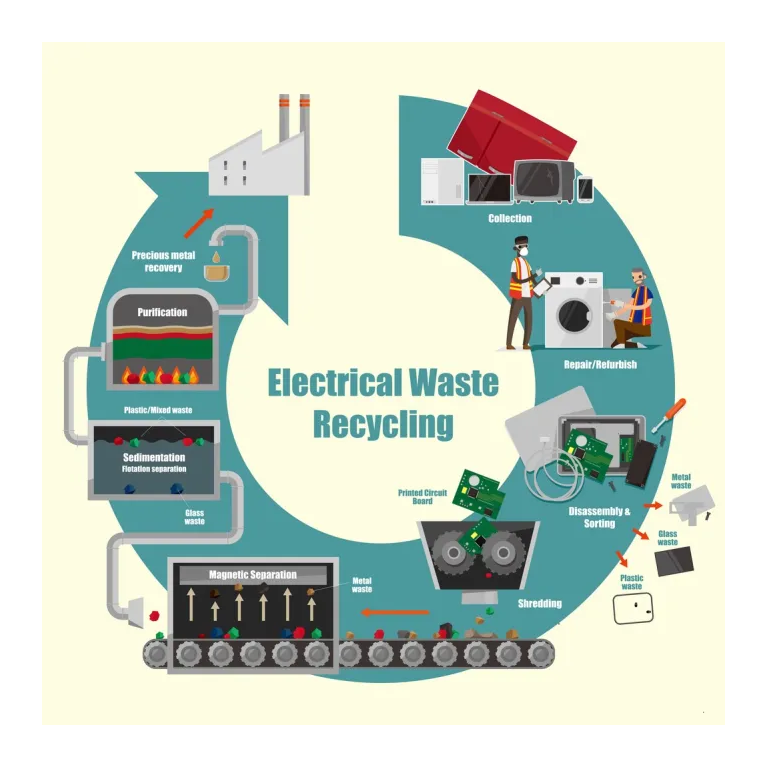
Inside our recycling process
Receiving & weighment
Every consignment is weighed and logged against your pickup record.
Segregation
Items are sorted by category — IT, telecom, appliances, cables, batteries.
Manual dismantling
Trained workers separate plastics, metals, PCBs and hazardous components.
Material recovery
Copper, aluminium, iron and plastics are recovered and sent back into manufacturing.
Hazardous handling
Hazardous fractions go to authorised TSDF under our hazardous waste agreement.
Certification
Green Certificate and Form-6 entry issued for your records.

Why businesses choose Ecofusion
- UPPCB e-waste authorisation and Consent to Operate
- EPR registration for producer compliance
- ISO / IAF / EGAC verified operations
- Factories Act, 1948 compliant workplace
- Zero-landfill approach for recoverable material
- Traceable from your pickup to final recovery
Why authorised recycling matters
A large share of India's e-waste still ends up with informal recyclers, where burning and acid baths release toxic fumes and contaminate soil and water. Choosing an authorised recycler is the single most effective step a business can take to prevent that.
It also protects you legally: e-waste rules place responsibility on bulk consumers to hand over waste only to authorised recyclers or registered producers, and to keep records of it.